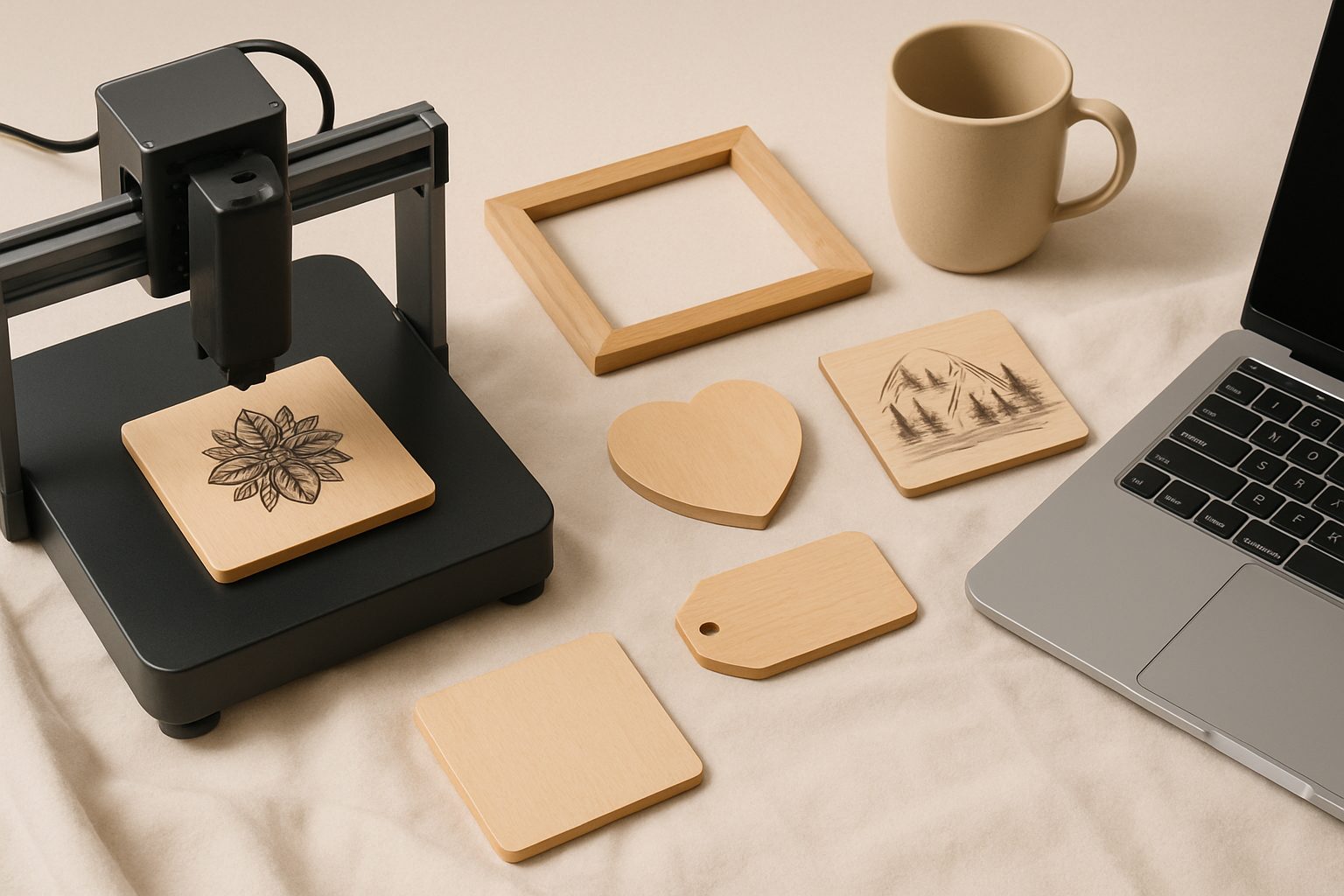
Sculpfun S30 Pro Review UK: Powerful, Upgradeable & Great Value
The Sculpfun S30 Pro sits in an interesting position in the UK market. It's not the cheapest 20W laser engraver available, but it's genuinely capable of commercial work, upgradeable in ways most competitors aren't, and it costs significantly less than premium alternatives like the xTool D1 Pro. If you're serious about engraving—whether that's personalised gifts, business signage, or mixed production work—it deserves consideration.
What You Get: The Specs That Matter
The S30 Pro is a 20W CO₂ laser engraver with a 300×500mm cutting bed. That's a useful size: big enough for A4 sheets lengthways, small enough to sit on a workshop bench without dominating space. The 20W tube gives you depth you genuinely need for commercial cutting—materials like acrylic, wood, leather, and anodised aluminium respond properly, not hesitantly.
The build is solid. The frame is aluminium extrusion, the lens assembly is modular (more on that later), and the motion system uses standard stepper motors with a belt-and-pulley drive. It's not a precision manufacturing machine, but for engraving and cutting, the repeatability is good enough for production work. The laser tube itself is a standard CO₂ unit rated for around 8,000–10,000 hours of operation, though real-world lifespan varies with usage intensity and cooling.
Air Assist: The Feature That Changes Everything
Here's where the S30 Pro distinguishes itself from many budget competitors. It comes with a built-in air-assist system powered by a small compressor. This matters because:
- Cutting speed increases by roughly 30–40% on materials like acrylic and plywood
- Charring around cuts is reduced, which means cleaner edges on wood and darker materials
- Engraving depth becomes more controllable, because the air pressure helps clear debris from the cut path in real time
The compressor is noisy—around 75dB if you're nearby—but it's part of what makes this engraver commercially viable. Without air assist, a 20W laser is respectable for engraving but underpowered for reliable production cutting on certain materials.
Modular Design: Upgrade Path Included
Sculpfun designed this machine with upgrades in mind. The lens assembly, mirror mounts, and nozzle are all user-replaceable without specialised tools. The air-assist nozzle can be swapped for alternative designs if you find one works better for your material mix. The power supply is also modular, which means if you eventually want a 40W tube, the foundation is largely there.
In practice, this matters less if you're starting out, but it's genuinely useful if you're running this engraver for 2–3 years. It extends the economic life of the machine and means you're not locked into a single configuration.
How It Compares to the xTool D1 Pro
The xTool D1 Pro costs roughly 40–50% more than the S30 Pro in the UK market. For that premium, you get:
- A smaller bed (300×400mm versus 300×500mm—actually a slight advantage to Sculpfun)
- Diode laser technology instead of CO₂, which means less effective at cutting darker materials
- Better software integration and a more polished user experience
- Lower running costs (diode lasers use less electricity)
The D1 Pro is the better machine for fine engraving on lighter materials, photography work, and jewellery. But if you're cutting through acrylic, slate, wood, or anodised aluminium regularly, the S30 Pro's CO₂ tube and air assist give it a genuine advantage. For a fuller comparison, see our xTool vs Sculpfun guide.
Practical Strengths
The S30 Pro excels when you're processing multiple materials. It handles thick acrylic (up to 10mm with patience), hardwood reliably, leather well, and engraves anodised metal cleanly. The air assist means you're not stopping to clean the lens every few jobs. Autofocus works, though you may need to adjust settings per material type—this is normal across the category, not a weakness specific to Sculpfun.
The control software (LightBurn compatible, plus native Sculpfun software) is functional rather than elegant. You'll manage, but it's not as intuitive as some premium alternatives. That said, if you're using LightBurn—which many UK users do—the machine is just another option in the driver list.
Real Limitations
Running costs are the main one. CO₂ tubes need regular water cooling, and you're paying for mains electricity at roughly 0.02p–0.03p per job hour. Maintenance is straightforward but ongoing: cleaning the tube weekly, checking water quality monthly, and replacing the tube every 2–3 years depending on usage.
The bed size is fixed. If you regularly need to cut pieces larger than 300×500mm, you'll be seaming, and that constrains what you can do commercially.
The machine is loud during air-assist operation. If your workspace is shared or quiet-sensitive, factor in soundproofing.
Who Should Buy This
The S30 Pro makes sense if you're running or starting a small production business—gift engraving, signage, architectural models, leather goods—and you need a machine that cuts reliably through a range of materials without breaking the budget. It's also solid for serious hobbyists who want commercial-grade capacity without commercial-grade pricing.
It's not the best choice if your primary work is photo engraving, acrylic-only production, or if you need a significantly larger bed.
The Verdict
The Sculpfun S30 Pro is well-designed, genuinely capable, and priced fairly for what it delivers. The 20W CO₂ tube with air assist is a real advantage for commercial work, the modular design gives you an upgrade path, and the cost sits at a point where the machine can pay for itself within reasonable timescales. It's not perfect—the software is workmanlike, not elegant—but as a working tool, it performs.
More options
- xTool D1 Pro Diode Laser Engraver (Amazon UK)
- Sculpfun S30 Pro Laser Engraver (Amazon UK)
- Atomstack A20 Pro Laser Engraver (Amazon UK)
- Laser Engraver Safety Goggles (OD6+) (Amazon UK)
- Laser Engraver Air Purifier / Fume Extractor (Amazon UK)